
Staying ahead in today’s fast-moving health landscape requires more than surface-level advice—it demands clear, practical insight into how daily habits, cardio optimization, and integrated wellness strategies work together. If you’re searching for actionable ways to improve your overall well-being, strengthen long-term resilience, and align with modern preventive medicine policies, this article is designed to give you exactly that.
We break down complex health concepts into straightforward, evidence-informed guidance you can apply immediately. From holistic fitness principles to realistic daily routine hacks, every recommendation is grounded in current health research and real-world application. Our approach combines health sector analysis with proven wellness strategies to ensure you’re not just following trends—but building a sustainable foundation for lifelong vitality.
By the end, you’ll understand how to optimize your cardiovascular health, integrate smarter habits into your routine, and make informed decisions that support long-term wellness rather than short-term fixes.
From Reactive to Proactive: A New Framework for Health
Treating preventable diseases costs the U.S. over $1 trillion each year (CDC). Yet our system functions like a fire department waiting for flames instead of installing smoke detectors. In other words, we fund rescue more than resilience.
After years studying integrated wellness in action, we’ve seen how preventive medicine policies can rewire this approach. Workplaces can incentivize movement breaks; communities can design walkable spaces; individuals can treat daily habits like compound interest for the body.
Ultimately, you’ll discover practical policies that shift health from emergency response to everyday maintenance sustainably forward.
The High Cost of Inaction: Why Proactive Policies Are Non-Negotiable
First, let’s talk dollars and sense. Chronic, preventable diseases—like type 2 diabetes and heart disease—account for roughly 90% of the $4.5 trillion the U.S. spends annually on healthcare (CDC). That’s not just a medical issue; it’s an economic one. Lost productivity, disability claims, and rising insurance premiums quietly drain national GDP. Some argue healthcare costs are simply the price of longer life expectancy. However, longevity without quality of life is a hollow win.
Beyond budgets, the human cost is staggering. When health isn’t prioritized early, people lose energy, mobility, and often mental resilience. Absenteeism rises. Workplace engagement falls. Families absorb emotional and financial stress (and yes, burnout becomes the uninvited houseguest). What’s next if this trend continues? Higher taxes, strained hospitals, and widening inequality.
At its core, this isn’t about willpower. It’s systemic. Food deserts limit access to fresh produce. Unsafe neighborhoods discourage outdoor activity. Ultra-processed foods are cheaper and more visible than whole options. In that context, “just make better choices” feels naïve.
That’s precisely why preventive medicine policies are high-ROI investments. Every dollar spent on prevention can yield significant savings in long-term care costs (Trust for America’s Health). Pro tip: When evaluating policy proposals, follow the long-term savings—not just the upfront price tag.
Workplace Wellness: Policies that Foster a Culture of Health
Free gym memberships look impressive on recruitment brochures (and yes, the branded water bottles are nice). But research shows perks alone rarely shift long-term health outcomes. According to the CDC, prolonged sedentary behavior is linked to higher risks of cardiovascular disease and premature death—even among people who exercise regularly. That means workplace wellness must go deeper than surface-level benefits.
Integrated Breaks: Movement as a System, Not a Suggestion
“Movement micro-dosing” refers to short, structured activity breaks—5–10 minutes of stretching or walking every hour. A 2023 study in Medicine & Science in Sports & Exercise found that five-minute walking breaks every 30 minutes significantly improved blood sugar and blood pressure markers. That’s cardio optimization in action: small inputs, measurable returns. Policies that schedule calendar-protected movement breaks transform good intentions into default behavior.
Nutritional Environment: Designing Better Defaults
Choice architecture—the way environments influence decisions—matters. Research from Harvard T.H. Chan School of Public Health shows that placing healthier foods at eye level increases selection rates. Simple policy shifts can include:
- Positioning fruit near checkout counters
- Pricing water lower than sugary drinks
- Highlighting high-fiber meals with clear labeling
These nudges don’t eliminate choice; they improve it.
Mental Health Support as Infrastructure
The WHO estimates depression and anxiety cost the global economy $1 trillion annually in lost productivity. Policies that normalize mental health days, offer confidential counseling, and embed preventive medicine policies into benefits packages reduce stigma and improve retention. When mental wellness is treated as foundational—not optional—organizations build cultures where health is the standard, not the exception.
Community-Level Change: Building Health into Our Environments

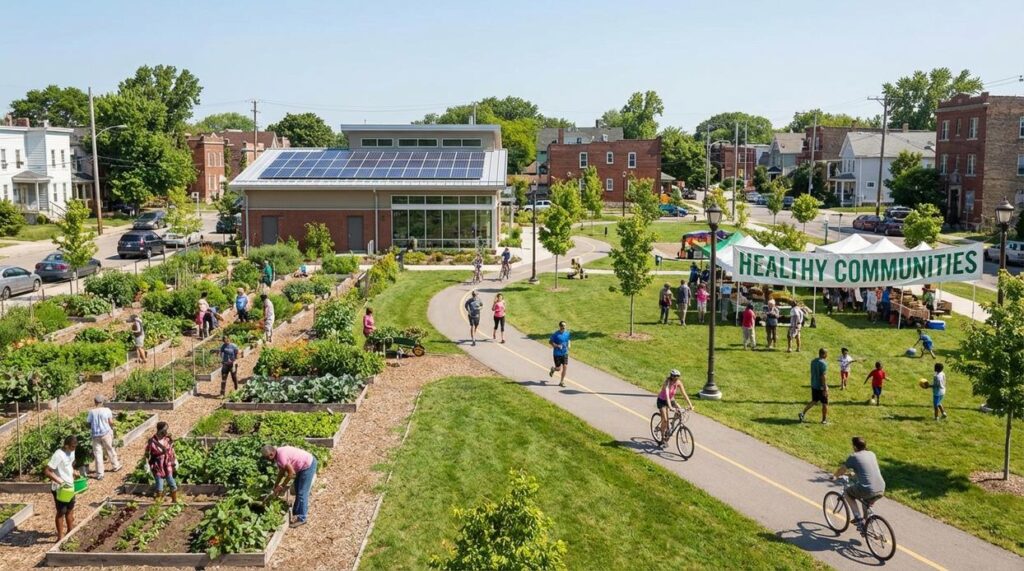
Healthy living isn’t just about willpower. It’s also about design. Active design principles—urban planning strategies that encourage movement—make physical activity part of daily life rather than a scheduled chore. For example, walkable neighborhoods (areas with connected sidewalks, short block lengths, and nearby shops) naturally increase step counts. Research shows people in walkable communities are more physically active and have lower obesity rates (CDC). Similarly, protected bike lanes and accessible parks reduce barriers to exercise—because safety and convenience matter (no one wants to dodge traffic just to get cardio).
However, some critics argue these upgrades are expensive and slow to implement. That’s fair. Yet long-term healthcare savings often outweigh upfront infrastructure costs (American Public Health Association). In other words, investing in sidewalks today may reduce hospital bills tomorrow.
Next, consider food accessibility policies. A food desert is an area with limited access to affordable, nutritious food. Supporting farmers’ markets in underserved neighborhoods or funding community gardens gives residents practical access to fresh produce. For instance, cities that subsidize mobile produce vendors have reported higher fruit and vegetable intake among residents (USDA). Pro tip: pairing these efforts with cooking demos boosts real-world impact.
Equally important is public health education. Ongoing campaigns—think hydration reminders, stair-use prompts, or meal-prep guides—translate preventive medicine policies into daily habits. Clear messaging reduces confusion and builds consistency over time.
Consider Copenhagen’s bike infrastructure expansion. After investing in protected lanes, the city saw cycling rates exceed 60% for work commutes, alongside measurable cardiovascular benefits (European Cyclists’ Federation). The lesson? When environments make the healthy choice the easy choice, communities thrive.
For deeper system-level context, see telemedicine growth opportunities and limitations explained.
Bridging the Gap: How Individual Action Amplifies Policy
The Personal Responsibility Myth suggests health is purely about willpower. But behavior is shaped by environment—food deserts, unsafe streets, and preventive medicine policies all influence daily choices (CDC). Personal effort matters, yet policy sets the stage.
So create your own Personal Policy:
- Schedule workouts like meetings.
- Pre-plan meals every Sunday.
- Set a consistent sleep window.
Here’s the synergy: a protected bike lane (policy) only works if you ride it (personal action). Critics argue policy alone should suffice. But real change happens where structure meets habit—think less talk, more pedals.
Your Blueprint for a Healthier Tomorrow
Waiting for sickness is like waiting for your phone battery to hit 1% before charging it. That’s reactive care. A smarter path blends daily habits with supportive policy, including preventive medicine policies that stop problems early. When you act now, you gain:
- Energy that fuels your goals.
- Lower long-term costs and fewer sick days.
- Confidence knowing your community has your back.
Advocate for one proactive workplace policy this month. Try one new health hack this week—maybe a 10-minute walk after meals (small moves, big wins). Build resilience today, and tomorrow gets easier. Done.
Take Control of Your Long-Term Health Today
You came here looking for practical, sustainable ways to improve your health—and now you have a clearer roadmap. From holistic fitness principles and cardio optimization techniques to smarter daily routine hacks, you understand how small, consistent actions compound into long-term vitality.
But here’s the reality: ignoring early warning signs, poor habits, and the lack of preventive medicine policies in your personal plan can lead to burnout, chronic fatigue, and avoidable health complications. Your biggest pain point isn’t just feeling “off” — it’s not having a clear, integrated strategy to stay ahead of illness before it starts.
The good news? You don’t need extreme diets or overwhelming overhauls. You need structured, integrated wellness strategies that align with your lifestyle and are built around prevention, performance, and sustainability.
Now it’s time to act. Start implementing one cardio optimization technique this week. Upgrade one daily habit. Review your current approach to preventive medicine policies and ensure your routine supports long-term resilience. If you’re serious about protecting your energy, strengthening your heart, and building a future-proof health plan, don’t wait—commit to a proactive system today and take the first decisive step toward total-body wellness.
 Lajuana Riccardina is a thoughtful voice behind modern wellness and intentional living, bringing a warm and grounded perspective to health, balance, and everyday self-care. She is passionate about helping readers embrace realistic habits, stronger routines, and a more mindful lifestyle through practical guidance that feels both encouraging and achievable.