
If you’re searching for practical ways to improve your cardiovascular fitness, boost stamina, and build sustainable performance, understanding heart rate zone endurance is the place to start. Many people train hard but see limited progress because they don’t align their workouts with the right intensity zones. The result? Burnout, plateaus, or inefficient sessions that don’t deliver lasting gains.
This article breaks down what heart rate zone endurance really means, how it impacts your cardiovascular system, and how to apply it to your daily training routine for measurable results. You’ll learn how to structure sessions, optimize recovery, and build long-term aerobic capacity without overtraining.
Our guidance is grounded in established exercise science, performance physiology research, and evidence-based conditioning principles used in both athletic and clinical settings. By the end, you’ll have a clear, actionable framework to train smarter, improve stamina, and make every workout count.
Cardio shouldn’t feel like a daily coin toss. When you anchor workouts to specific heart rate zones, you replace randomness with precision. Heart rate zones are intensity ranges based on your maximum heart rate; each zone trains a different energy system. The payoff? Faster recovery, stamina gains, and fewer burnout weeks.
Here’s what you gain:
- Smarter sessions that build heart rate zone endurance without overtraining
- Clear progress markers you can track weekly
- Greater fat oxidation and aerobic capacity (your body becomes an efficient engine)
By testing your max heart rate and assigning zones, you train with purpose—and reap compounding results.
What Are Heart Rate Zones and Why Do They Matter?
Heart rate zones are specific ranges of beats per minute, each tied to a percentage of your maximum heart rate (MHR). Think of them like gears on a bike: each gear moves you forward, but at a different intensity and efficiency. Shift wrong, and you either spin your wheels or burn out too fast.
The core principle is simple: different zones trigger different physiological responses. Lower zones support fat oxidation and aerobic base building. Mid-range zones improve cardiovascular capacity. Higher zones push your anaerobic threshold, sharpening speed and power (the “sprint scene” of your workout montage).
Training with intention turns random sweat into strategy. When you align workouts with specific zones, every minute serves a goal—whether that’s stamina, speed, or heart rate zone endurance.
To estimate MHR, use 220 minus your age. For more accuracy, try the Karvonen formula or lab testing.
Pro tip: Reassess zones every few months as fitness improves.
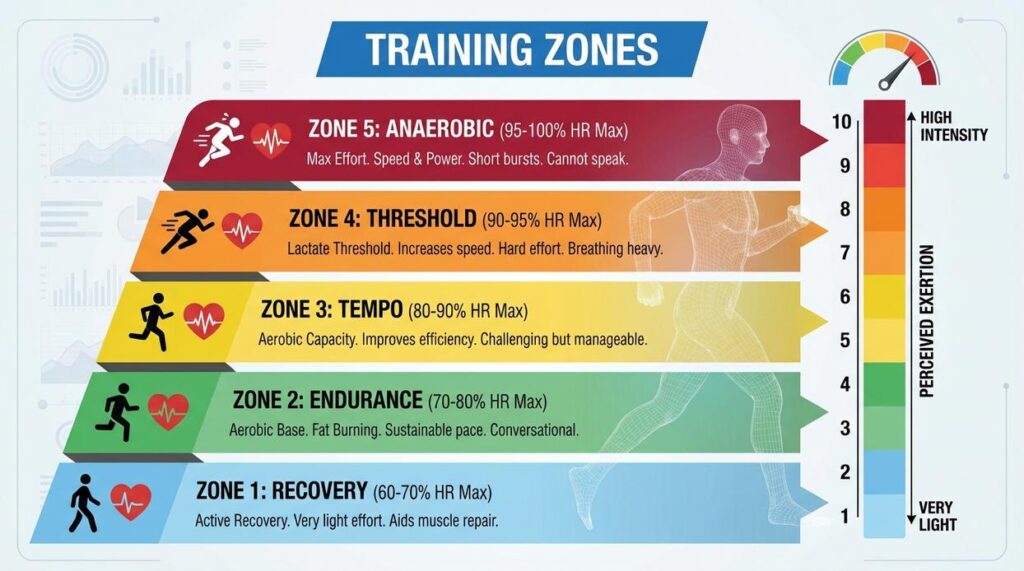
The 5 Training Zones: A Detailed Breakdown for Targeted Results

Most breakdowns of heart rate zones stop at percentages. Useful, yes—but incomplete. What’s often missing is how these zones integrate into a sustainable performance system. Let’s fill that gap.
Training zones are not just intensity markers—they’re strategic tools.
1. Zone 1 (50–60% MHR – Very Light Activity)
This is your recovery engine. At this intensity, circulation improves, metabolic waste clears, and your nervous system downshifts. Think easy walks, mobility circuits, or slow cycling. Research shows low-intensity activity enhances blood flow and recovery between harder sessions (American Council on Exercise). It’s also ideal for warm-ups and cooldowns—foundational to any integrated wellness plan. Skip it, and you compromise everything built on top.
2. Zone 2 (60–70% MHR – Light Activity)
Often called the “conversational pace,” this zone builds aerobic base and improves fat utilization. Studies published in The Journal of Physiology link steady Zone 2 training with mitochondrial growth, meaning better energy production over time. This is where heart rate zone endurance is truly developed. It may feel slow (almost too easy), but elite marathoners log most miles here for a reason. Pro tip: If you can’t speak in full sentences, you’ve drifted too high.
3. Zone 3 (70–80% MHR – Moderate Activity)
“Comfortably hard” defines this zone. You’re improving cardiovascular efficiency and nudging your lactate threshold—the point where fatigue accelerates. Some argue Zone 3 is the “gray zone” and should be avoided. That’s partially true for beginners. But strategically placed tempo sessions here improve race pace durability and stamina.
4. Zone 4 (80–90% MHR – Hard Activity)
Now we’re sharpening speed and anaerobic capacity. Speech becomes fragmented. Short intervals here increase stroke volume and performance ceiling (National Strength and Conditioning Association). It’s demanding—but transformative.
5. Zone 5 (90–100% MHR – Maximum Effort)
Reserved for brief HIIT bursts, Zone 5 maximizes VO2 max and peak power output. Think 20–60 second sprints. Because it’s taxing, pairing it with proper recovery protocols after high intensity cardio sessions is non-negotiable.
The advantage? Instead of guessing intensity, you now deploy each zone with precision—like shifting gears in a performance car, not flooring the gas every mile.
Structuring Your Workouts: From Theory to a Weekly Plan
A few years ago, I trained hard almost every day—thinking more sweat meant more progress. Instead, I plateaued (and felt constantly exhausted). That’s when I discovered the 80/20 Principle: spend about 80% of your training time in lower-intensity Zones 1–2 and 20% in higher-intensity Zones 3–5. In simple terms, intensity zones are heart rate ranges that reflect how hard your body is working. Zone 1 feels easy, Zone 5 feels like you’re sprinting for your life.
Some argue that real gains only come from grinding at high intensity. And yes, intense sessions improve speed and power. But research on polarized training shows endurance athletes improve more sustainably when most sessions stay aerobic (Seiler, 2010). In my experience, shifting to this balance finally moved the needle.
Here’s a simple weekly template for heart rate zone endurance:
- Monday: Zone 2 for 45 minutes
- Tuesday: Rest
- Wednesday: Zone 4 intervals
- Thursday: Zone 2 for 60 minutes
- Friday: Rest
- Saturday: Long Zone 2/3 workout
- Sunday: Active recovery in Zone 1
Meanwhile, daily routine hacks make the structure sustainable. Take brisk 15-minute walks at lunch. Choose stairs. Do light cycling while watching TV (yes, even during your favorite drama cliffhanger).
Of course, these are guidelines—not commandments. If sleep tanks or soreness lingers, adjust. Your body whispers before it screams. Listen early. Pro tip: track morning resting heart rate to spot fatigue trends. Fitness isn’t about crushing every workout—it’s about stacking consistent, smart weeks.
Putting It All Together for Lasting Fitness
You can keep guessing during cardio—or you can train with precision. That’s the difference between random sweat sessions and measurable progress.
Think of it as Option A vs. Option B. Option A: push hard every workout, feel exhausted, and hope endurance improves. Option B: train by heart rate, target specific systems, and build capacity step by step. The second approach wins because it develops heart rate zone endurance instead of just burning calories.
Here’s why this structured method works:
- Zone 2 builds your aerobic base, strengthening your heart and improving oxygen delivery.
- Higher zones sharpen speed and power, but only after the base is solid.
- Balanced training reduces burnout and plateaus, keeping progress consistent.
If inconsistent results have frustrated you, this is your reset. Calculate your estimated zones, then spend most of your next workout in Zone 2. Notice your breathing, recovery, and stamina. Build from there—and let physiology, not guesswork, guide you.
You came here looking for clarity on how to improve your cardio performance, structure your routine, and finally see measurable progress. Now you understand how strategic training, recovery balance, and heart rate zone endurance work together to build sustainable results instead of short bursts of motivation.
The real frustration isn’t a lack of effort — it’s putting in the work without seeing consistent improvement. When your cardio feels stagnant, your energy dips, and your routine lacks structure, it’s easy to lose momentum. But with the right optimization techniques and integrated wellness strategies, you can turn every workout into purposeful progress.
Here’s your next move: apply these principles to your weekly routine and start tracking your heart rate zones with intention. If you’re serious about breaking plateaus and maximizing endurance, explore our proven wellness frameworks designed to simplify your training and amplify results. We’re trusted by thousands of health-focused individuals who rely on our insights to train smarter — not just harder.
Stop guessing. Start optimizing. Take control of your cardio today and build the endurance your body is capable of.
 Paulata Cromwellike brings a fresh and empowering approach to personal wellness, focusing on the connection between healthy routines, physical vitality, and everyday resilience. With a passion for making health feel more accessible and motivating, she shares insights that inspire readers to improve their energy, movement, and overall well-being in a balanced and sustainable way.